By Cassie Sevigny
Watershed Education Network (WEN) is a 501(c)3 non-profit organization dedicated to fostering knowledge, appreciation, and awareness of watershed health through science and outreach. We’re growing the next generation of watershed stewards.
Monday, January 25, 2021
Living in a Caddisfly Case: Part Five
Monday, January 18, 2021
Living in a Caddisfly Case: Part Four
By Cassie Sevigny
Monday, January 11, 2021
Living in a Caddisfly Case: Part Three
By Cassie Sevigny
Monday, January 4, 2021
Living in a Caddisfly Case: Part Two
By Cassie Sevigny
Monday, November 16, 2020
My Summer as a Writer in Residence at Rattlesnake Creek Dam
By Cassie Sevigny
A glint of white, a shine of running water ahead. The water is seeping in from the corner of the drained reservoir, opposite the headgates, already braiding through the ditches left by the trucks. The new trickle of stream already washes away the drying, damp, and cracking clay below my feet, the clear water flaunting the muted rainbow of glacial stones. These revealed rivulets of rainbow rocks are their own kind of slow, mini excavation alongside the deconstruction of the dam.
This is a note I wrote while exploring the drained Rattlesnake Creek reservoir as an artist in residence for Trout Unlimited. I was finishing my Master’s in Economics at University of Montana (UM) when I found Open AIR Montana’s artist residency program. Eager to work on a creative project after plunging into statistical econometric analysis, I applied. My excitement heightened upon seeing Rattlesnake Creek dam as a site option because of my prior experience in the creek with the Watershed Education Network (WEN) as a college student. I have participated in citizen science with WEN’s Stream Team and taught local students about river science on WEN field trips. The citizen-led efforts and success of initiating the defunct dam's removal inspired me on a civic level. I was not part of the initial process to approve the removal of the dam, so this was my chance to be involved!
Since so much of my writing depends on what I see and feel, I did not know exactly where my writing would take me with this project. I wanted to express the importance of this body of water to Missoulians and beyond, the science behind the effects of dams on river ecology, the politics and history of its installation, abandonment, and removal, and the sheer subjective experience of this human-environment interaction. During the residency I spent many days hiking up to the dam overlook, or to the site itself when the construction workers had the day off. I wandered around, connecting pieces of historical and ecological information with aspects of the site itself.
To inform myself, I attended public talks, tours, and virtual lectures by Rob Roberts and Ladd Knotek. I read about bull trout and the importance of the Rattlesnake Creek to local native societies. I helped dig out items from a garbage-and-dirt heap when a local historian came to inspect its trash and treasure. I took pictures of the plants I found along the creek and learned about them with the iNaturalist app. I reviewed the plan for the dam’s deconstruction, and the reconstruction of a semblance of what the original creek might’ve looked like. And of course I ran into WEN staff members along the trail examining the dam removal’s progress.
WEN gave me experience in applied science outdoors with a local stream that connected me to my Montana environment in the first place. Trout Unlimited and Open AIR Montana gave me just the opportunity I needed and desired to explore creative writing and my relationship with an ecosystem that has a soft spot in my heart.
Wednesday, November 4, 2020
Cassie's First Bear!
By Cassie Sevigny
One Tuesday I dropped in on Level 2 Stream Team. I had to go to the bridge crossing Rattlesnake Creek but not cross it myself. Instead I stayed left, barely found the narrow overgrown trail along the bank, and followed it upstream. “Don’t forget to make noise to alert bears since you’re walking alone,” Deb had warned me. Aissa found me before I’d gotten far and showed me to the site.
I stood on mossy rocks and watched Aissa, Stephie, Reyna, and Joe wrangling insect samples from a special collecting net into a jar. It was a process that required all four sets of hands. Out of the corner of my eye I saw a dark figure leaning over a fallen branch in the woods across the stream. Weird spot for someone to be wandering, I briefly thought, but people are weird. A few minutes later I saw the black shape stretch up, and up, and up into a tree. It was no person. I couldn’t even form words in my excitement and surprise. I just pointed. “A bear!” Aissa told everyone. “It’s eating berries from the mountain ash.”
The bear lounged for a while, ignoring us. Or perhaps not noticing us, for ten minutes later it lumbered toward the creek and suddenly stopped. There were people in the creek! I wondered if it had intended to come down for a drink or a splash. Likely bears do not usually encounter people in their creek so far upstream, away from main trail access. The bear paused for a bit, contemplating what to do, and eventually retreated into the woods. I wondered if it was going to find another spot.
Deb arrived later with Joe Glassy, WEN board member, who she ran into on the trail. I find this a common occurrence with Deb, who seems to know everyone. Joe had brought his dog Lucy and his camera. How unfortunate he had missed the chance to photograph the bear! But as we talked and the team returned to collecting the fatal insect sample, the bear re-emerged from the trees a ways upstream! It lay down at the edge of the water. If not for the slight movement, it could’ve been mistake for a large black boulder among the rocks.
I’ve lived in Missoula six years now and seen plenty of deer, birds, insects and squirrels. I know bears frequent the Rattlesnake, and I’ve even been at Greenough during reports of bears in the creek. But this was the first one I’ve seen. I felt part elation and part realization that I couldn’t remember how you were supposed to respond to a bear’s presence. Stream Team had bear spray of course, and we didn’t need to use it. But the fact that I was in the bear’s territory and came face to face with one reminded me how wild the land is, and how easily we can ignore that when we build houses and ranches and roads and trails and bring our urban selves so close to the edge of a wilderness.
Tuesday, November 3, 2020
Resplendent Stream Team
By Cassie Sevigny
Returning to WEN as a staff member has felt a bit like a homecoming. Stream Team days pull me out of my apartment isolation and into the woods, resplendent with yellow and red leaves and striped with tree trunks among the dry blond underbrush. I see Rattlesnake creek, which is not cutting through the forest but embedded as part of it, and I realize sometimes we forget about things that make us happy.
The cool fall weather indicates Stream Team season is ending, so I’ve been lucky to go out several times in the past few weeks. One trip brought me to a location between Greenough and the dam site that I had not been to before. A family was leaving the area around the tilted narrow stone table and bench when we arrived. Upon the table we spread out our gear around a little fall fairy house someone had made. Red berries perched in the shelves of pinecones, and leaves and pine needles stuck out like flags from a mossy wood-and-bark house. That day ended with wine and a light plum cake made with Deb’s recipe and Aissa’s plums. The immediate feeling of being among family and working to a common goal makes me happy.
I also helped with a special Stream Team day with University of Montana’s Water Policy class, taught by Ada Montague, this time at a familiar site by the Duncan trailhead bridge. Clouds clung thickly to the sky and the thin conifers swung about in the wind. It was hard to find insects in our tubs with all the leaves and other fall debris. They needed someone “solid on bugs” to teach the volunteers what to look for and how to identify the insects we were counting. I wasn’t sure how much I would remember but trusted in my ability to recognize and relearn. Turns out even after a few years’ absence from leading any stations, I still know my aquatic insects! Pointing out the tiny wiggling ones reminded me of when I was a new volunteer, delightedly soaking up every bit of Al’s professional expertise that I could.
Working with WEN has taught me to take the lead with whatever they throw at me. I’ve also been reminded that I have plenty of skills and knowledge from years of working with WEN. That expertise makes me comfortable teaching and leading stations, even if I’m initially hesitant, so that others can learn the excitement of their watersheds too.
Friday, June 26, 2020
Washington Middle School Flagship Water Explorers: Part Four
Introducing the Watershed Education Network’s Washington Middle School Flagship Water Explorers 2020
By Deb Fassnacht and Jenna Rolle
Week Four: Marsh Soup
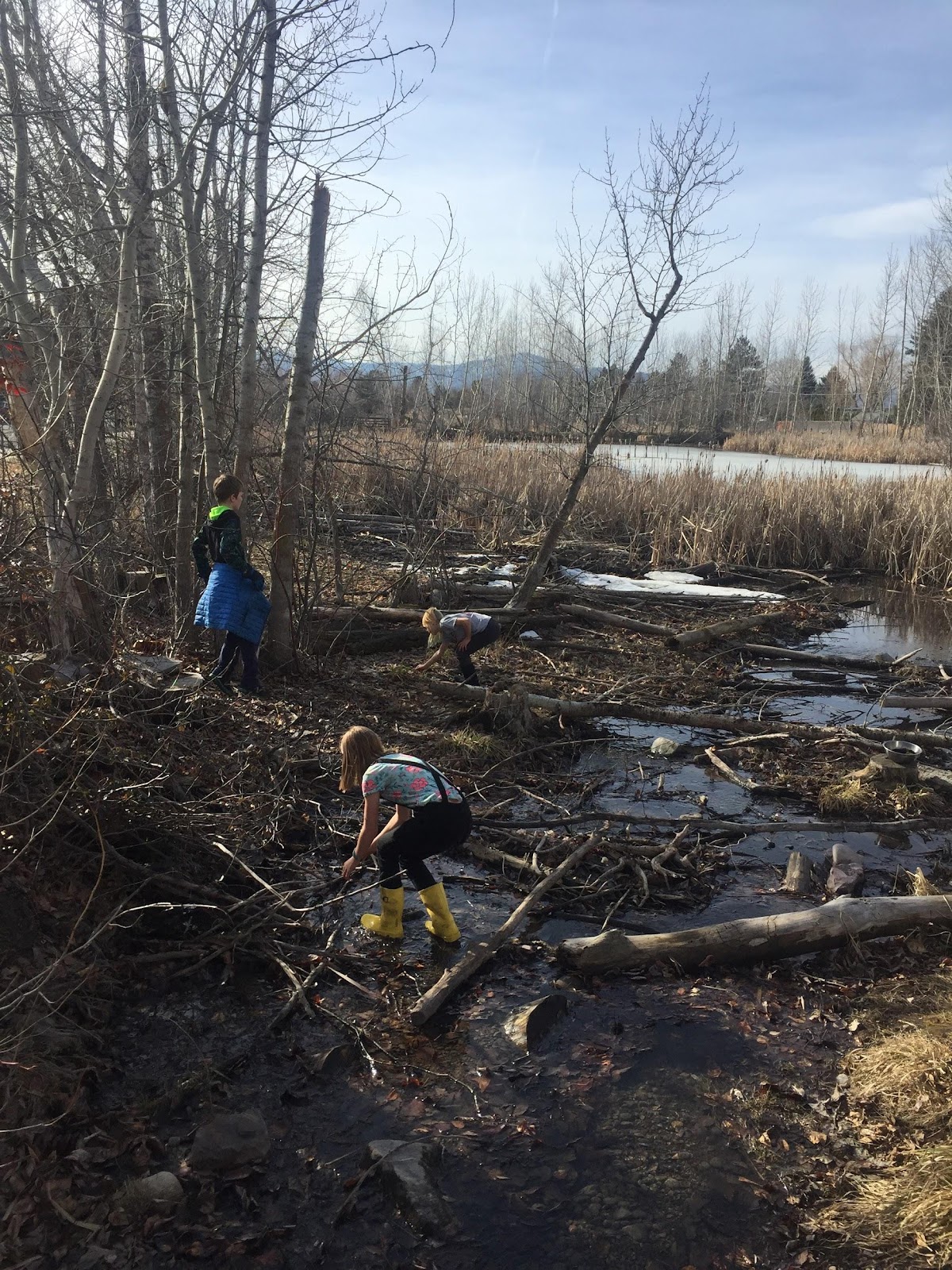
Our fourth week of Water Explorers I was really excited to try out a lesson I had found in a curriculum book in the WEN office: Marsh Soup! The goal of this lesson is to familiarize the students with the marshy area that surrounds Bancroft pond. The marshy areas may not be as classically beautiful or fresh as a flowing stream or an idyllic pond, but they support the bulk of riparian habitat for important plants, animals, and insects. Luckily, this batch of Water Explorers was more than happy to muck around in the marsh, regardless of stinky smells or unappetizing squishing sounds underfoot.
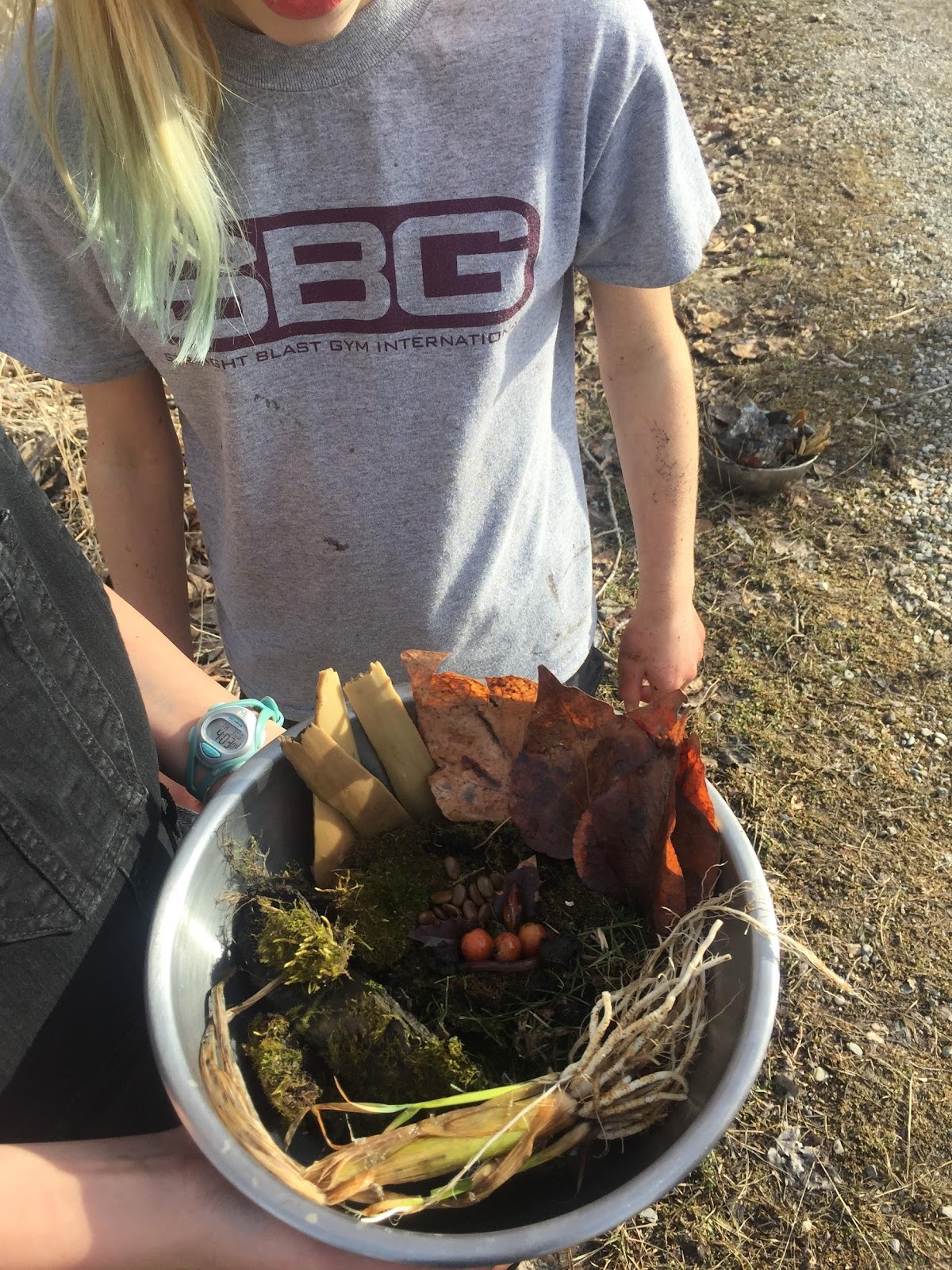
To make marsh soup (or salad, or casserole, or whatever the students want it to be) each team was given a bowl and instructed to build a meal from the marsh. The teams were then to be scored on two criteria: quantity of ingredients and presentation. Both teams took different approaches. Team one opted for quantity, and ended up with 15 different plants, 6 different types of mud, and ice, stream water, and pond water. Team two created a beautiful presentation of seeds, moss and leaves, and still fit quite a few different ingredients in there.
It was really wonderful to see the whole team of explorers out there hunting for marsh treasures and mucking about in an area of the hydrologic cycle that most people ignore. We returned to Washington covered in mud and still chattering about all the cool stuff we found in the marsh. After a quick apology to the parents for the state of their clothes, I sent the students off for their Spring Break.
Friday, June 19, 2020
Washington Middle School Flagship Water Explorers: Part Three
Introducing the Watershed Education Network’s Washington Middle School Flagship Water Explorers 2020
By Deb Fassnacht and Jenna Rolle
Week Three: More Cattails and Bugs!
Friday, June 12, 2020
Washington Middle School Flagship Water Explorers: Part Two
Introducing the Watershed Education Network’s Washington Middle School Flagship Water Explorers 2020
By Deb Fassnacht and Jenna Rolle
Week Two: Meeting all the Water Explorers and Exploring Bancroft Pond
The aim of the first week was to get the students oriented to Bancroft Pond, a beautiful park just down the road from their school, and get a feel for their interests in the water-sphere. To prompt this, I had each student write down two observations and two questions they had after a day of exploring the area. The hope was to use these questions and observations as guides to help plan curriculum. I quickly noticed that what the students seemed most interested in were the cattails, which had recently begun to seed out and could be ripped apart and thrown like confetti. All in all, the students seemed to be incredibly happy to be outside, in spite of cold temperatures, and I was excited to have such an energetic and engaged group.
Friday, June 5, 2020
Washington Middle School Flagship Water Explorers: Part One
Introducing the Watershed Education Network’s Washington Middle School Flagship Water Explorers 2020
By Deb Fassnacht and Jenna Rolle
Week One: Meeting the Flagship Explorers and heading out to discover Pattee Creek and Bancroft Pond
On the first day, Deb met with a few interested students at the school. We met in the cafeteria room with the big cafeteria tables. All the Flagship programs had a table and sign directing kids to their activities. There were crafts, dungeons and dragons, robotics, and some martial arts. I went for one more trip from my car for art supplies and when I returned, I saw one young girl at our table. I asked if she was there for Water Explorers and she replied with a big smile, “Yes.” Then she quickly blurted out, “I LOVE water” and we both laughed. And I said, “I do too, it is one of my favorite places.” We decided to wait for others before going out the back door for a recess. One student came by and said he would be there next week.Wednesday, May 20, 2020
Hellgate Elementary Exploration
October 15, 2019
By Bailey Bartell


Wednesday, May 13, 2020
My Stream Team Introduction
My third experience with Stream Team was with Level One. This group is a group of young adults that go to Rattlesnake Creek every Sunday in order to take varying sets of data. This past Sunday we went to a spot 100 feet below the dam in order to collect physical (cross-section, pebble count, velocity, and photo points), chemical (temperature, pH, and dissolved oxygen), and bug diversity from the creek. We had eight people and lots of work to accomplish. This time, everyone was stationed in one location with no intention to move. It was so powerful to witness so many people dedicating their free time to citizen science! We rallied on getting things done quickly and sharing responsibilities so we collected all of the data for the day in just around three hours. We were lucky to spend the day in dappled sunshine and a light breeze. Wednesday, December 12, 2018
Living in a Caddisfly Case: Part One
Friday, September 21, 2018
Rattlesnake Creek Discovery
It seemed that they fed off of each other's energy, without any verbal communication. It was so fun to read them, and then help steer the afternoon schedule according to their wants and needs. We had so much fun every afternoon. Whether we were taking a break from the heat and painting rocks inside an MIS classroom, focusing on a groundwater lesson, or playing with spray-bottles at the Greenough playground- this camp was totally kid-centric. It was so fulfilling to help facilitate the creation of positive summer memories for these six, very awesome kids.
Tuesday, August 14, 2018
What Goes into an Experiment? - Sentinel Floating Islands
I joined Sylvia at Sentinel High School again as her two classes learned about experimental design. They had been given an article the previous session detailing an experiment about the efficacy of floating islands in removing excess nutrients from the water. Broken into groups, the students sifted through the fancy terminology and scientific structure of the article to find the key points to summarize.
Sylvia had the students write unfamiliar vocabulary words on the board. She addressed the first word off the bat as it pertained to the experiment's first design.
"Batch mesocosm can be one of those stressful words," Sylvia said. Mesocosm just means medium-sized-world, as the experiment was not on a tiny scale or a large scale. "Batch" referred to the way the researchers included water in the system. They created batches of water that mimicked the composition of natural pond or creek water and held it motionless in containers. This is contrast to the second design, which allowed that water to flow.
The students described the batch mesocosms as being a box shape with a native macrophyte on the small floating island. Sylvia then explained another vocabulary word. "A microphyte is basically a small plant." Like algae. She compared the prefix to the word "microscope" which the students were familiar with, to make the connection that microscopes help you see tiny things such as microphytes. A macrophyte, then, is an aquatic plant that is large enough to see, like grass. So each little island had a native plant living atop it.
"Why do you need a control?" Sylvia asked.
"What's a control?"
Sylvia explained that one of the batches did not have a floating island or any plants, just a metal sheet to produce the same amount of shade. This plantless batch was the control.
"So, to compare to the other one," a student said.
"Why do they have three experimental tanks?" These would be the batches with plants.
"Alter them to see different effects," a student suggested. Indeed, a researcher would use their experimental tanks in comparison to the control to see which variables produce measurable changes and which do not, or which produce the most change. Sylvia got to a more basic point though, which is that researchers want to make sure their "data is stable." This means that they gather enough data from the experimental batches that they can find a pattern across all of them. This ensures that if, for example, one of the plants is dying, it doesn't determine all of the results. Having extra batches helps make sure the correct variables contribute the desired information.
Then they moved on to the next design. The flow tanks took place in "a giant shipping container" divided in half lengthwise with water flowing through each side. Here the researchers wanted to know if the rate of water flow mattered, so one side had slow-moving water and the other had fast-moving water. The steel container had a special coating to prevent metal ions from entering the water, since they can be toxic to plants. Each side also had soil at the bottom. Sylvia reminded the students that soil can have nutrients in it, especially when it contained decomposed materials, so the soil imitated natural conditions where the nutrients came from within the system.
"One of them absorbed more than the other," a student noted.
"Yes, definitely. Which one?" Sylvia asked.
"I think it was the high flow," the student answered.
Sylvia reviewed the previous lesson on the phosphorus and nitrogen cycles. Both of these are nutrients that are important to plant growth, but in large amounts they can lead to the overgrowth of microphytes: algae blooms. The side with high water flow had more of these nutrients removed by the floating island plants, indicating that faster streams are better at preventing algal overgrowth.
With the design out of the way, Sylvia broke the experiment down into its most basic parts. She guided the students through identifying the dependent and independent variables of each design. The students identified the dependent variables fairly quickly (the presence or absence of a floating island in the batches, and water flow in the flow tanks), but had trouble with the independent variable. Sylvia emphasized that the answer was simple, and the same across both designs, since the researchers were interested in one thing. This was the level of nutrients (phosphorus and nitrogen) in the water, as lower levels mean the floating islands are removing them more effectively.
![]() |
| Mini floating island models |
Field experiments have advantages too. "You get all the natural things that could happen right there," another student said, so you don't have to try to replicate all the variables that do exist and interact. If an experiment left some of these variables out, the results might not accurately reflect what would happen in a real ecosystem when one variable changes. This helped the students realize that an effective laboratory experiment should aim to be as much like the natural system as possible.
Sylvia set the students to work in small groups on a worksheet that asked them to identify other variables that could be important in designing a floating island experiment. I wandered around to guide their thought processes, without giving away any answers.
Sylvia's repeated use of small groups was intentional, as it can help students develop leadership and social skills through conversation practice. It also helps them consider multiple angles and the ideas of their classmates when dealing with complex issues.
Many of the students looked sleepy and stayed quiet through most of the lesson, as I remembered I was during my high school mornings, but the answers on their worksheets gave away the connections they were making with the material. Sylvia was thrilled.
-Cassie Sevigny
AmeriCorps Team Member
Media Coordinator