Showing posts with label Washington Middle School. Show all posts

Friday, June 26, 2020

Washington Middle School Flagship Water Explorers: Part Four

Introducing the Watershed Education Network’s Washington Middle School Flagship Water Explorers 2020 

By Deb Fassnacht and Jenna Rolle

Week Four: Marsh Soup


Our fourth week of Water Explorers I was really excited to try out a lesson I had found in a curriculum book in the WEN office: Marsh Soup! The goal of this lesson is to familiarize the students with the marshy area that surrounds Bancroft pond. The marshy areas may not be as classically beautiful or fresh as a flowing stream or an idyllic pond, but they support the bulk of riparian habitat for important plants, animals, and insects. Luckily, this batch of Water Explorers was more than happy to muck around in the marsh, regardless of stinky smells or unappetizing squishing sounds underfoot. 

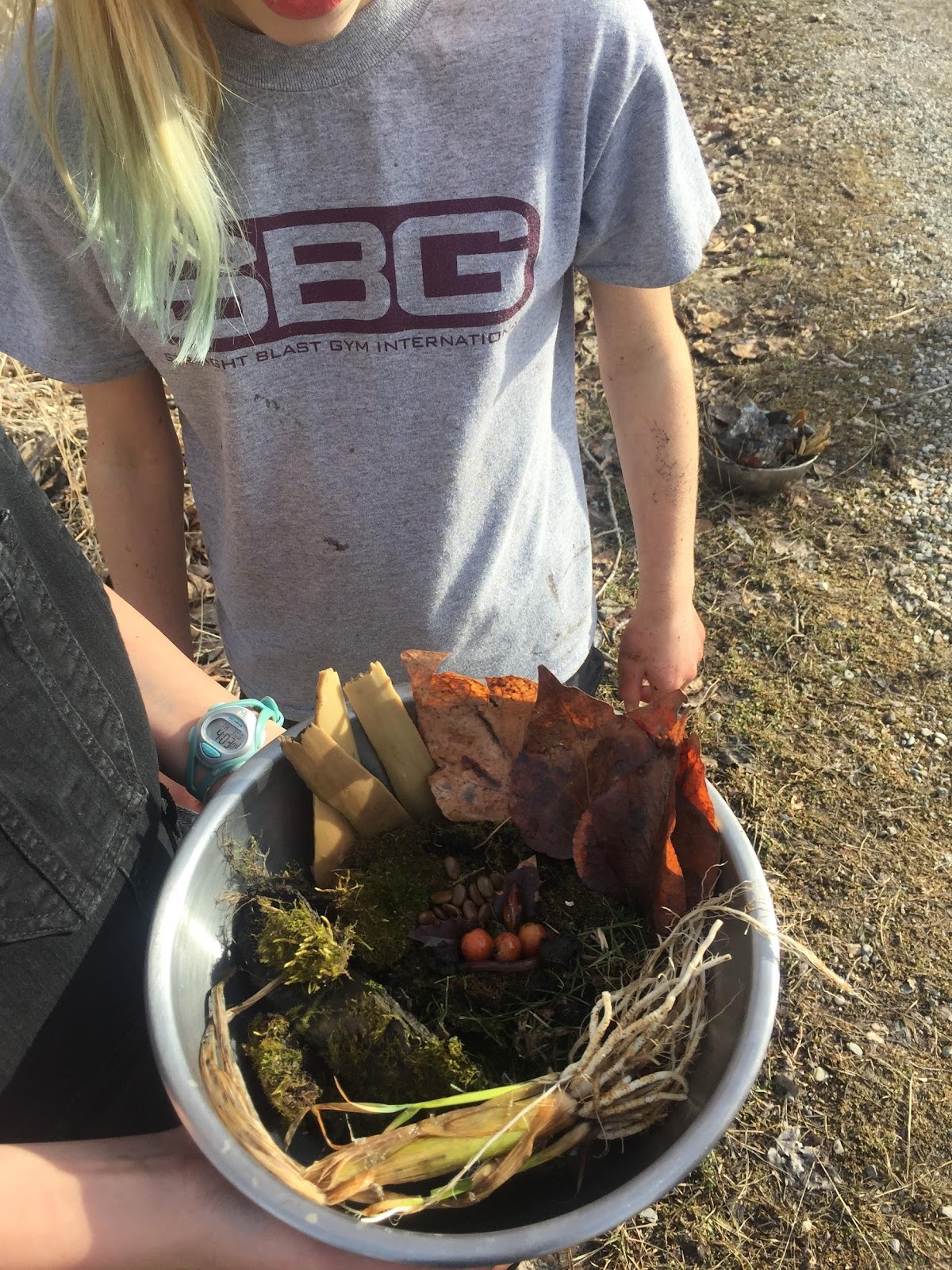
To make marsh soup (or salad, or casserole, or whatever the students want it to be) each team was given a bowl and instructed to build a meal from the marsh. The teams were then to be scored on two criteria: quantity of ingredients and presentation. Both teams took different approaches. Team one opted for quantity, and ended up with 15 different plants, 6 different types of mud, and ice, stream water, and pond water. Team two created a beautiful presentation of seeds, moss and leaves, and still fit quite a few different ingredients in there.


It was really wonderful to see the whole team of explorers out there hunting for marsh treasures and mucking about in an area of the hydrologic cycle that most people ignore. We returned to Washington covered in mud and still chattering about all the cool stuff we found in the marsh. After a quick apology to the parents for the state of their clothes, I sent the students off for their Spring Break.

Friday, June 19, 2020

Washington Middle School Flagship Water Explorers: Part Three

Introducing the Watershed Education Network’s Washington Middle School Flagship Water Explorers 2020 

By Deb Fassnacht and Jenna Rolle

Week Three: More Cattails and Bugs!

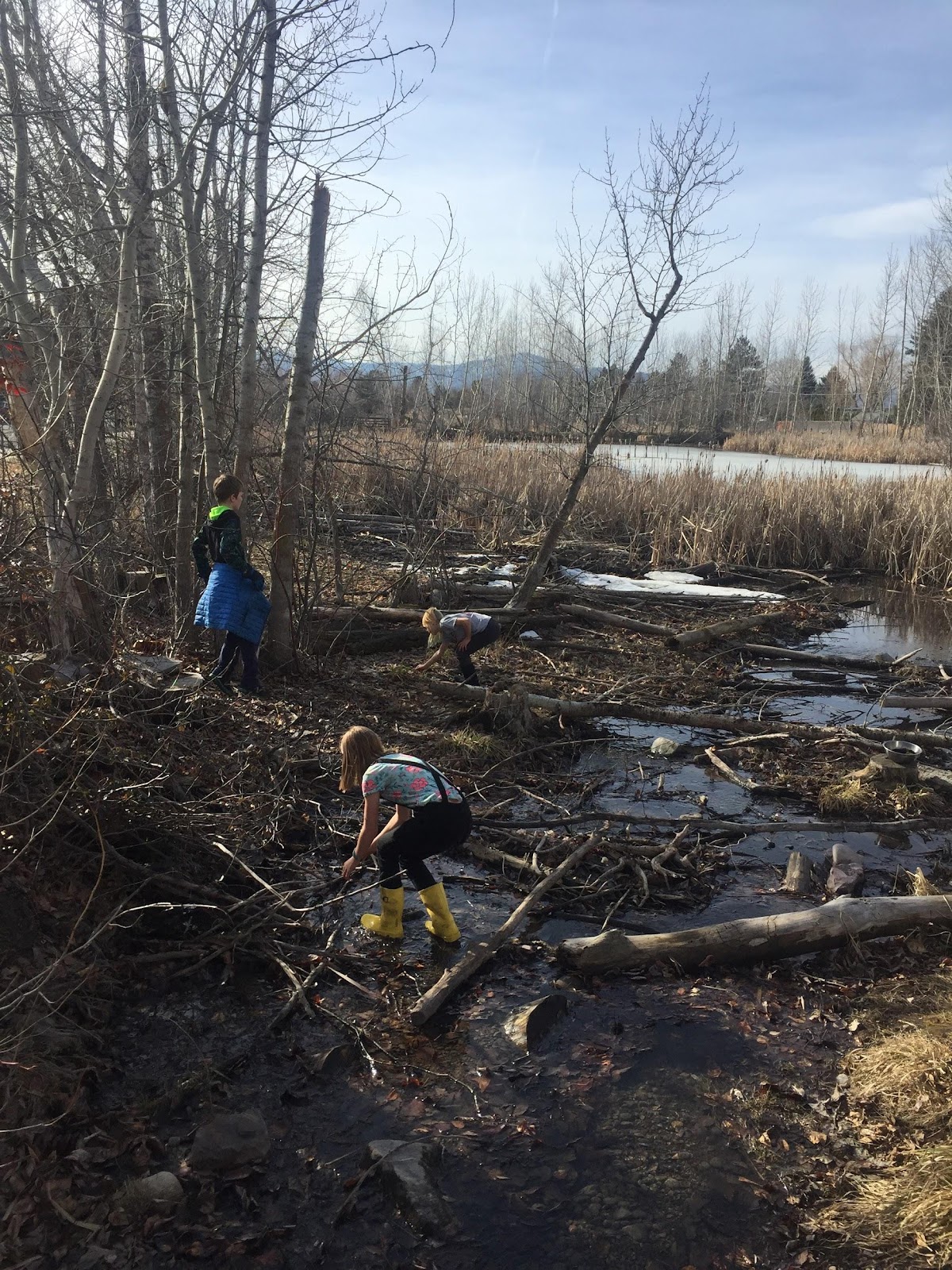
Our numbers were cut in half for the third week of Water Explorers, with two of the team in band practice. But the weather was semi-decent so we packed our clipboards and colored pencils and walked down to Bancroft Pond. After seeing the students’ interest in cattails, I had thought to do a miniature plant lesson. Each student found two plants around Bancroft Pond and sketched them, and wrote down two things that they thought made that plant stand out from the others. We then looked in a Wetland Plant Identification book to try and identify the plants they sketched. Finding the dichotomous key to be a bit over even my head, we ended up looking up the plant names and comparing the page to the sketches. They had done a really awesome job identifying the key features of their plants and what set those apart from the others for easy identification.


Once the plant lesson was finished, we still had another 20 minutes before we had to head back to Washington, so the students had free ‘wander and explore’ time. During this time we encountered a gigantic bug, at least 2 inches long, crawling around on a log in the ice of the pond. Much shrieking and excitement ensued. Once we had safely escorted the bug back to its habitat, we packed our bags up once again and headed back to the school. 

Friday, June 12, 2020

Washington Middle School Flagship Water Explorers: Part Two

Introducing the Watershed Education Network’s Washington Middle School Flagship Water Explorers 2020 

By Deb Fassnacht and Jenna Rolle

Week Two: Meeting all the Water Explorers and Exploring Bancroft Pond

The second week of Water Explorers at Washington Middle School was the first time the troupe of water-lovers was all together. All four 6th graders were able to attend, Deb joined for the first part of the lesson, and I was excited to lead a group outing to Bancroft Pond. After introducing ourselves to each other and setting some ground rules for the program, we grabbed our best outdoorsy shoes, jackets, and gloves and headed down to the pond.

The aim of the first week was to get the students oriented to Bancroft Pond, a beautiful park just down the road from their school, and get a feel for their interests in the water-sphere. To prompt this, I had each student write down two observations and two questions they had after a day of exploring the area. The hope was to use these questions and observations as guides to help plan curriculum. I quickly noticed that what the students seemed most interested in were the cattails, which had recently begun to seed out and could be ripped apart and thrown like confetti. All in all, the students seemed to be incredibly happy to be outside, in spite of cold temperatures, and I was excited to have such an energetic and engaged group.


Friday, June 5, 2020

Washington Middle School Flagship Water Explorers: Part One

Introducing the Watershed Education Network’s Washington Middle School Flagship Water Explorers 2020 

By Deb Fassnacht and Jenna Rolle


In January of 2020, Watershed Education Network’s team reached out to Washington Middle School to see about expanding citizen science with students there. We were encouraged to consider the after school program, Flagship. In the winter, we met with Flagship leader, Kristian Stipe to learn about how we could work with the afterschool program and lead students in grades 6-8 on water observations, explorations, and record change over time as citizen scientists. Lucky for us, Jenna Rolle, a winter volunteer and former hydrologic technician, wanted to join the afterschool explorations. Deb and Jenna kicked off this spring’s program.

Week One: Meeting the Flagship Explorers and heading out to discover Pattee Creek and Bancroft Pond

On the first day, Deb met with a few interested students at the school. We met in the cafeteria room with the big cafeteria tables. All the Flagship programs had a table and sign directing kids to their activities. There were crafts, dungeons and dragons, robotics, and some martial arts. I went for one more trip from my car for art supplies and when I returned, I saw one young girl at our table. I asked if she was there for Water Explorers and she replied with a big smile, “Yes.” Then she quickly blurted out, “I LOVE water” and we both laughed. And I said, “I do too, it is one of my favorite places.” We decided to wait for others before going out the back door for a recess. One student came by and said he would be there next week. 

We played ‘Ga-ga-ball,’ a form of dodge ball in a fenced area where the goal is to bounce the ball twice (saying "ga-ga") trying to hit the other person with the bouncing ball. I was the one trying to avoid the ball. The ball pit was filled with ice, water and mud, so soon we were a bit wet and muddy. Since it was a March day with sun shining and the smell of melted snow was in the air, we both wanted to go explore! We decided to go follow Pattee Creek to Bancroft Pond and do some observing and scouting for the rest of the group the following week. 

Such a beautiful day! We enjoyed the sun, the feel of spring, melting snow and a breeze on our faces. Bancroft Pond was frozen and still, sun and shadows with a few birds overhead. We looked for geese and ducks that would be coming back as the weather warmed. Old snow, feathers, and cattails from the year before were bending near the icy trails. My student explorer checked out the ice along the edge of the pond and in the puddles we came across on the trail…snap, crackle, and crunch. We hurried back to the school so we could be on time. I was impressed that my young explorer wanted to pick up garbage we found along the storm drain and beside the sidewalk as we went. We timed our walk for the following weeks. It took 20 minutes from the door of the school to Bancroft Pond. We knew we could explore and have students back each week.

Tuesday, April 3, 2018

Women in STEM and Women in WEN

     In late February and early March, WEN  partnered with the Girl Scouts to provide after-school STEM lessons for girls at Washington Middle School. WEN provided watershed education that involved watershed enactments, data collection, and interpretation.


     We started with a map of the Columbia Watershed, ours, to orient them. To better explain the components of a watershed, Kyra led them through a simple 3D watershed construction. The girls took soda bottles and egg cartons, among other miscellaneous items, to create their idea of a mountain shape. Kyra helped them place a tarp over this with the folds representing valleys so they could see how water (in the form of rivers and lakes) eventually flows to the lowest point.

     The girls guessed how water would flow down the tarp valleys by placing strings. The strings started on the slopes and ended in the valleys, indicating that they understood water flows to the lowest point. Pointing at each feature, Kyra explained the headwaters, tributaries, and river stem. The girls identified a few areas that would be lakes as well.

     Then we told the girls to be the watershed. Two served as the headwaters, a couple on the sides as tributaries, and one as the Pacific Ocean. Connecting these features were the rest of the girls, serving as the river. As the source of the water, the headwater girls passed beads to their river buddies, with the beads representing one volumetric unit of water flow. Downstream, each girl had a cup with which they transferred the beads. The Pacific Ocean held a small bucket to contain all the incoming "water" from the "Columbia watershed."


     First they simulated low river flow (summer), passing the beads leisurely. For high river flow (spring snowmelt or storms), Kyra instructed the headwaters to pass the beads more quickly. Rainy audio played in the background as beads overwhelmed the girls at intersections of headwaters and tributaries. Beads bounced out of cups, as if the river was flooding.

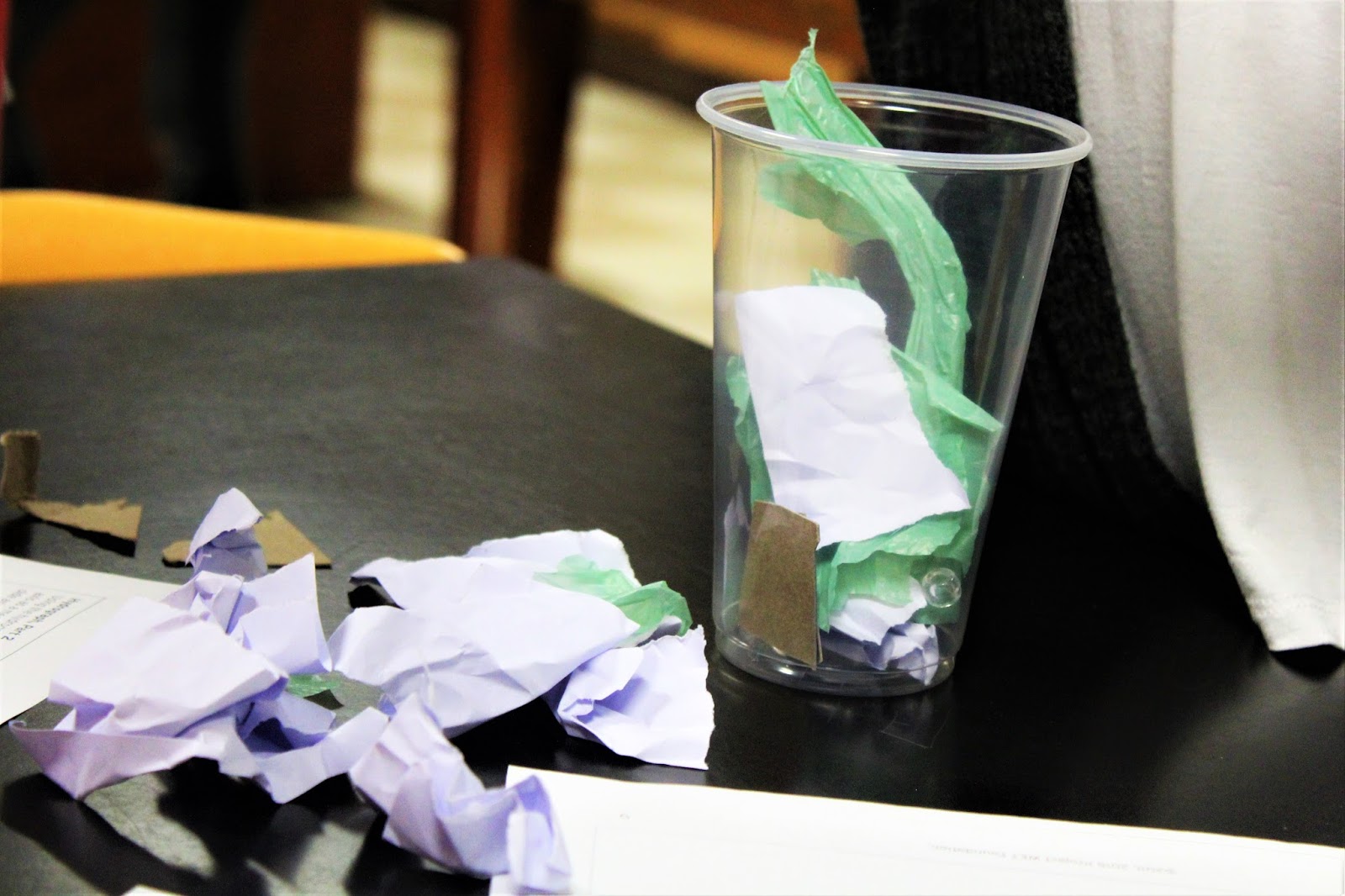
     Then Kyra modified the game. She gave one headwater and one tributary pieces of trash to pass along with the beads. "It's getting disgusting..." said the girl holding the Pacific Ocean, as the trash collected in her bucket. Notice how only a few parts were polluted, but it polluted everything downstream, Kyra said. Then the girls were given cards with pictures of aquatic invasive species. These included mussels and a weed. These also spread quickly through the watershed, overwhelming the girls. This demonstrated how easily invasive species can colonize an entire watershed from one entry point.


    After each round, the girls did the math to see how many beads, trash pieces, and invasive species ended up in the “ocean” and compared these numbers graphically. The numbers differed drastically depending on the flow of beads.


     What struck me as these activities went on was how interested and participatory these girls were, and that they voluntarily signed up for a STEM after-school program. This indicates that girls are interested in science and math. Either we are catching them at an age before they feel discouraged by STEM, or girls in the community are starting to get the message that STEM is for them too, both of which are good outcomes.

     I felt proud that we were able to provide so many female science role models for them, as we had 4 WEN staff and interns present, including myself. I think it helped that the biology teacher (and WEN board member) who hosted us in her classroom was also a woman, so her classroom was filled with animal artifacts like it was its own natural history museum. On one wall were poster assignments by some of her students, depicting genetics and heredity of dragons. This caught the attention of one girl, who said she couldn't wait to take biology and draw dragons. "Dragons are more fun than peas," the teacher told me.

     All we have to do to make kids - and adults - interested in science and technology is make the content fun and interesting! If that means applying real world concepts to fantasy animals, I'm all for it. I think we did a pretty good job keeping the lesson interesting, even though it was simple. "Who knew counting beads could be so fun?" the Girl Scout coordinator said.

     I also realized how many women work and volunteer for WEN in general – we had 8 women in the office at one time one day! We didn't have to try hard to rally up female volunteers to represent WEN for the girls in the after-school program because WEN is already full of women. Not to mention that WEN was started by a woman - our lovely Director, Deb. I was also proud of Kyra for taking charge of teaching the lesson and organizing the girls, while Natalie, Taylor and I engaged the girls in small conversations about the activities. Teaching was new to her, and while I am also uncomfortable leading lessons, Kyra seemed a natural.

     Exposure to women who already are or have been involved in science helps them realize that such a path is possible, and they can be successful in it. This gives me hope for the future of female-driven science innovation.

-Cassie Sevigny
AmeriCorps Volunteer
Media Coordinator
Wednesday, February 10, 2010

Last week at WEN

WEN staff participated in the Spring 2010 UM Volunteer Fair. Thanks to everyone who stopped by our table and expressed their interest in volunteering in our Spring field season! We've finalizing our training dates: March 4th and 13th. Please refer to our WEN Calendar for times and location.

Josh joined a Washington Middle School student Aden, and his family at Granite Creek Saturday. They collected aquatic macroinvertebrates and dissolved oxygen as part of his Middle School Science Fair project.